Misshift
Energy gears · Why the right advice doesn't work on you
Nothing crosses our day more often than advice:
- Advice other people give us.
- Advice we give other people.
- Advice from the books we read.
- Advice we give ourselves.
So why does advice that's clearly right sometimes do nothing for us — or backfire outright?
Every piece of advice has a gear. Matched, it works for you. Mismatched, it does nothing — or turns against you.
Most of the advice we hear is standardized. And it carries an unspoken premise: what level of energy it takes to execute — and whether your current state can carry that load.
Drag the ruler
I call this the Misshift ruler. The top handle is the gear you're in right now; the bottom is the gear the task demands. Like in the picture: the task needs 4th gear, you're in 2nd. The two ends miss each other — that's the feeling of willing but unable.
When they line up, things move. When they don't, the advice isn't just useless — it turns into friction that wears you down from the inside.
A few examples
Listening is 4th gear. Talking a lot is usually 2nd.
We're always told to listen more. Hard to actually do, though.
Because listening burns real energy — it's the mark of a 4th-gear state. Only when your system runs high can it hold someone else's context, especially context that disagrees with yours. In 2nd gear, you've read all the communication books. You know listening and understanding are the key. You just can't do it.
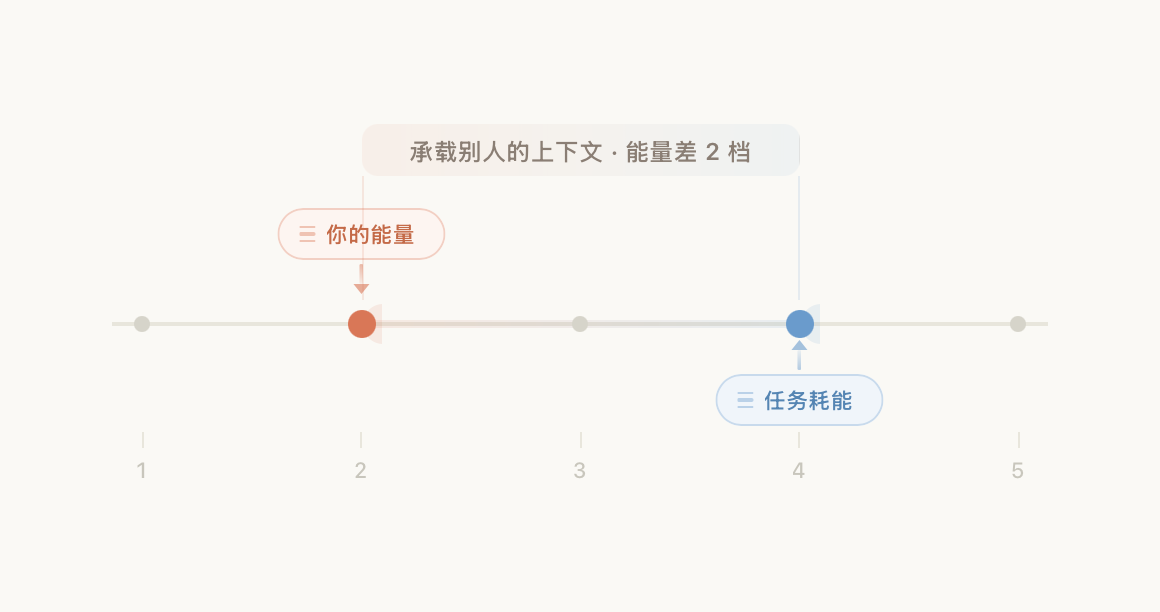
In 2nd gear, your system can only hold its own context. So it runs on autopilot: you talk and talk, trying to get the other person to understand you. They don't get it yet? You talk more.
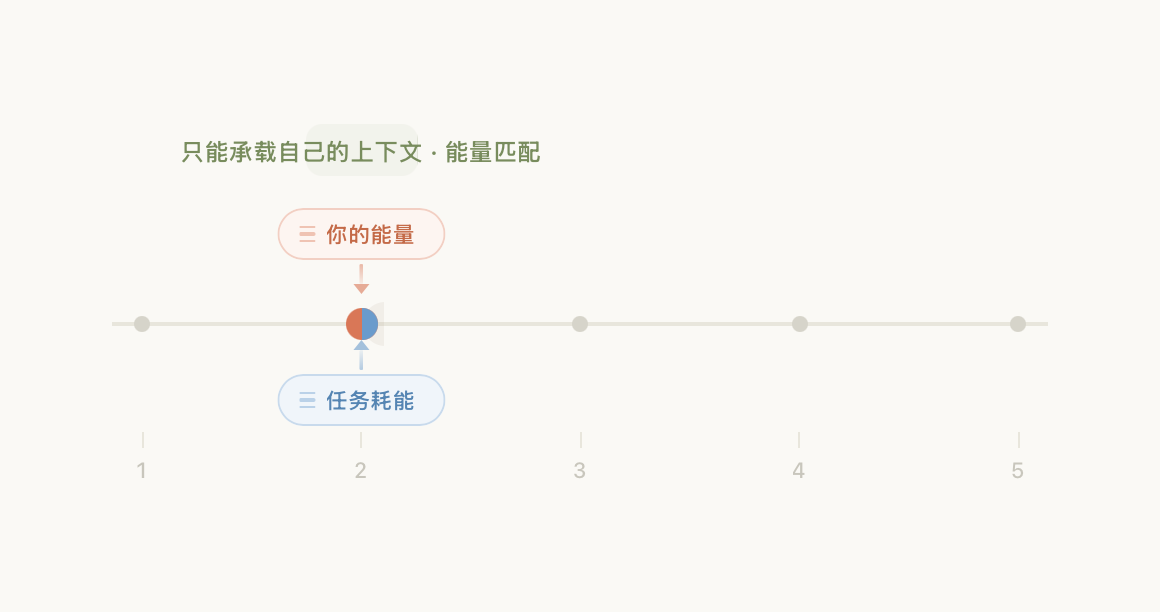
The cost of the mismatch: the listening advice does nothing here — while you believe you've been communicating the whole time, you've just been endlessly trying to be understood.
Subtracting is usually 4th gear. Adding is usually 2nd.
We're told to focus — the one thing that matters, cut the rest. It rarely happens.
Because the advice skips one thing: subtracting, especially letting go of what you've long been attached to, is usually a 4th-gear state.
Think about it. Building a product — which costs more energy, cutting a feature that has some value, or adding one more? Running a company — killing a business line, or launching another?
In 2nd gear, a person can't absorb the shock a new idea brings. But he still wants to guarantee success. So the only move left is piling on more inside the old frame. That's why a 2nd-gear founder can't stop adding features, hoping to cover a bigger audience — even when he knows perfectly well the product needs to be sharp.
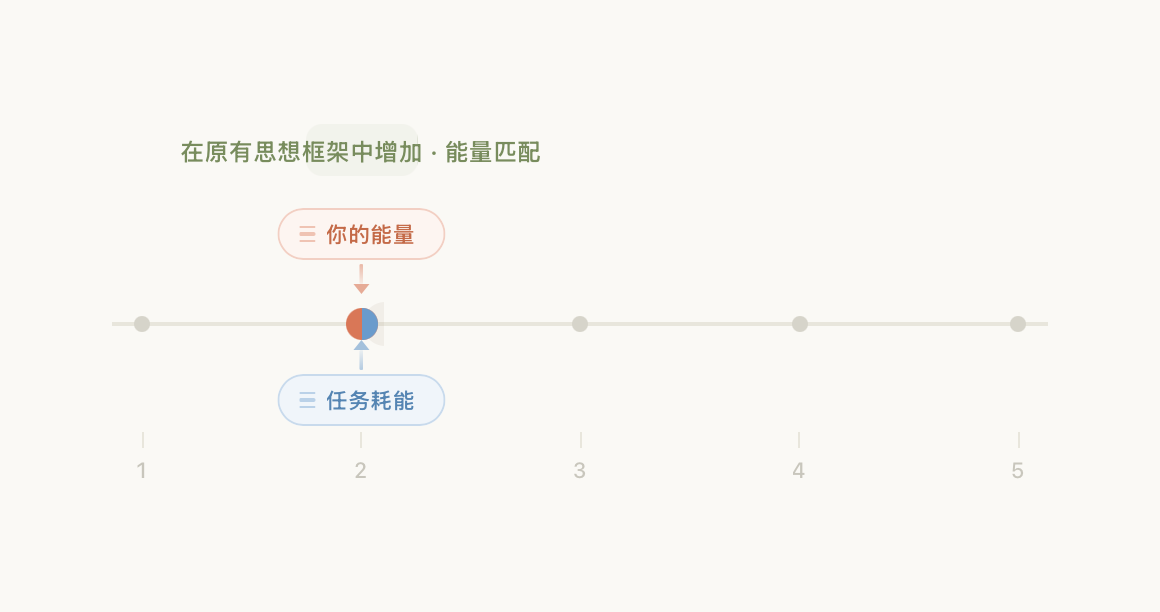
Cutting a decent-looking feature or a decent-looking business means your system runs high enough to absorb the impact of a new idea. Once the new idea is truly absorbed — that takes 4th gear — the old stuff isn't thrown out by willpower. It simply stops being needed. That's when trade-offs finally move.
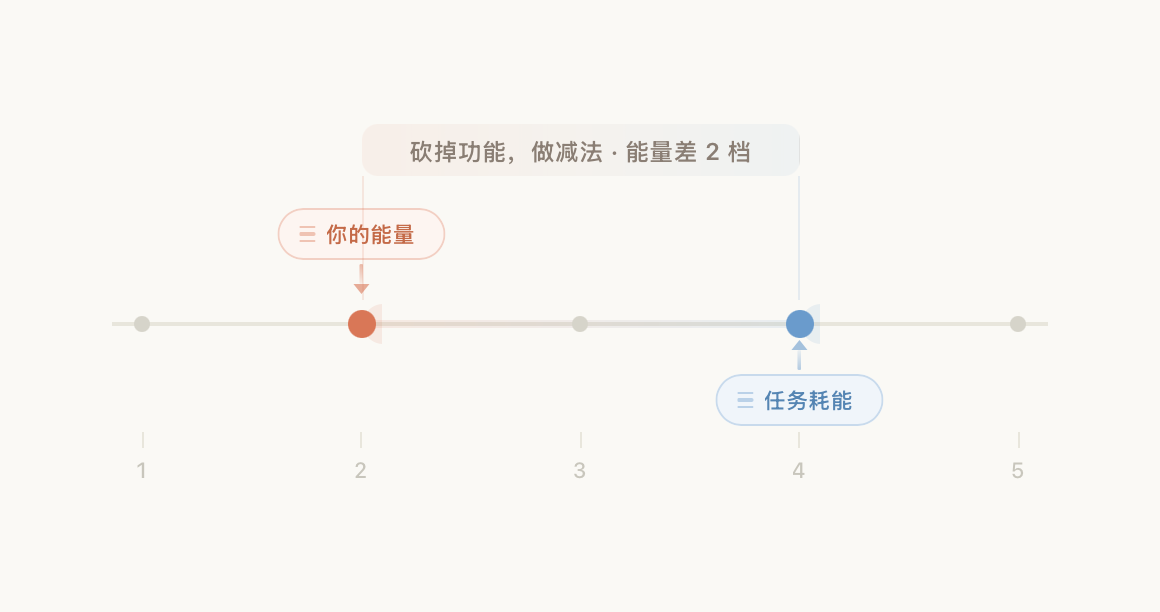
The cost of the mismatch: telling a 2nd-gear person to subtract just adds one more thing to his list he can't do. He'll agree with you, keep adding, and hate himself a little more.
Even the strongest people can lose discipline in 2nd gear
Someone who's been disciplined for years — whose discipline is his profession, who's a role model for others — can he lose it too?
Fitness has its master figures: the coach of coaches. Discipline is literally his job. Yet once his energy drops to 2nd gear, it all shows up anyway: emotional eating he can't stop, compulsive late nights, no strength for the gym.
The disciplined life used to be his default. In 2nd gear, even the routine moves stop working.
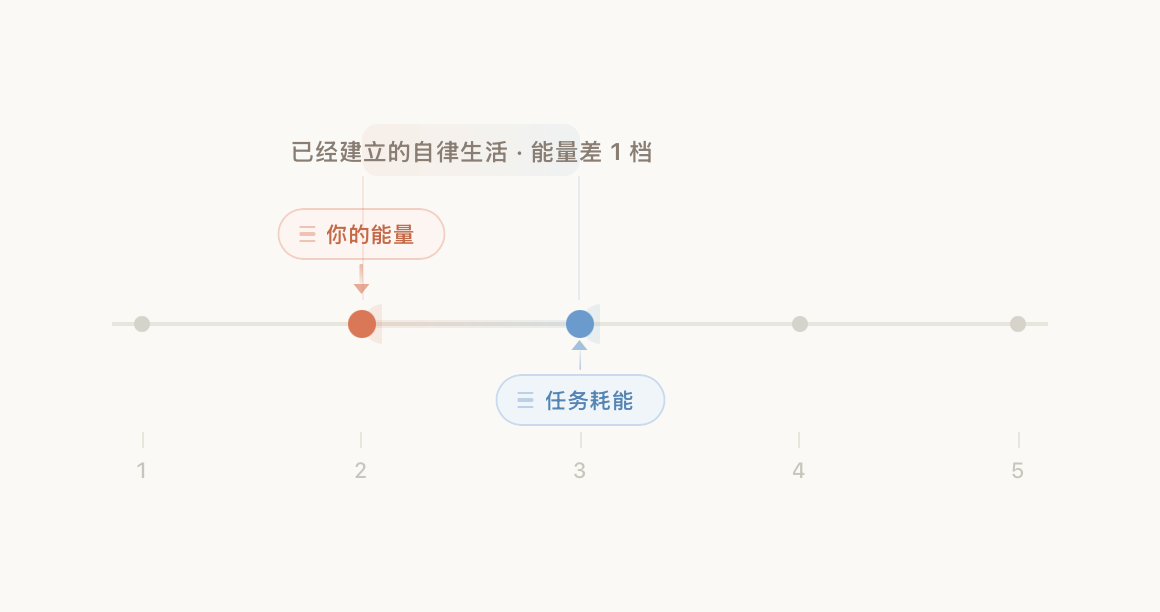
When he climbs back to 3rd, he needs no extra willpower — the disciplined default comes back on its own.
Same person. Same willpower. The only thing that changed is the gear.
The cost of the mismatch: one man's discipline can set him free. The same man's discipline can turn into self-blame.
Especially when he knows every principle, used to do all of it with ease — and now it all sits on him like a weight.
He can run a marathon, but can't make one phone call
Which costs more energy — running a marathon, or calling your parents?
Some people just pick up the phone and call. Others would rather run a few more marathons than make that call.
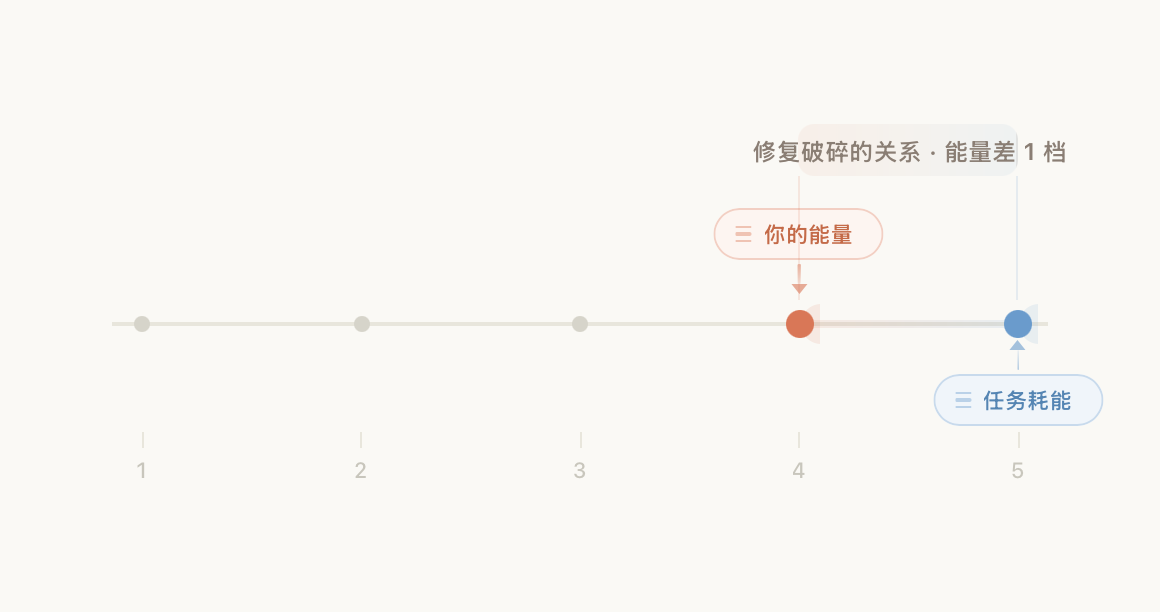
Maybe you're in 4th gear lately: up early to write, still present with your family after a full workday, studying after the kids are asleep, juggling several projects at work, hitting the gym five times a week.
Sounds like plenty of energy, right? And you might still be putting off that relationship-repair call — the one that clears up the misunderstanding and softens the conflict. Because that's a 5th-gear task, and in the wrong gear you'll keep avoiding it.
The cost of the mismatch: when you can't yet carry conflict and misunderstanding — the highest grade of mess — forcing the repair tends to make the relationship worse.
Facing your fear can be 1st gear. Facing the rebuild is 5th.
You can quit a job on impulse. You can't reinvent a career on impulse.
You can divorce on impulse. You can't repair a marriage on impulse.
We're told to face our fears. But look closely: for most people, "facing the fear" is really deciding to cut — leaving a toxic relationship, leaving an environment with no room to grow. These are not the same thing.
A real system transition means deeper self-knowledge, new capabilities, a new value network — a chain of high-energy moves. Quitting is just one link in it.
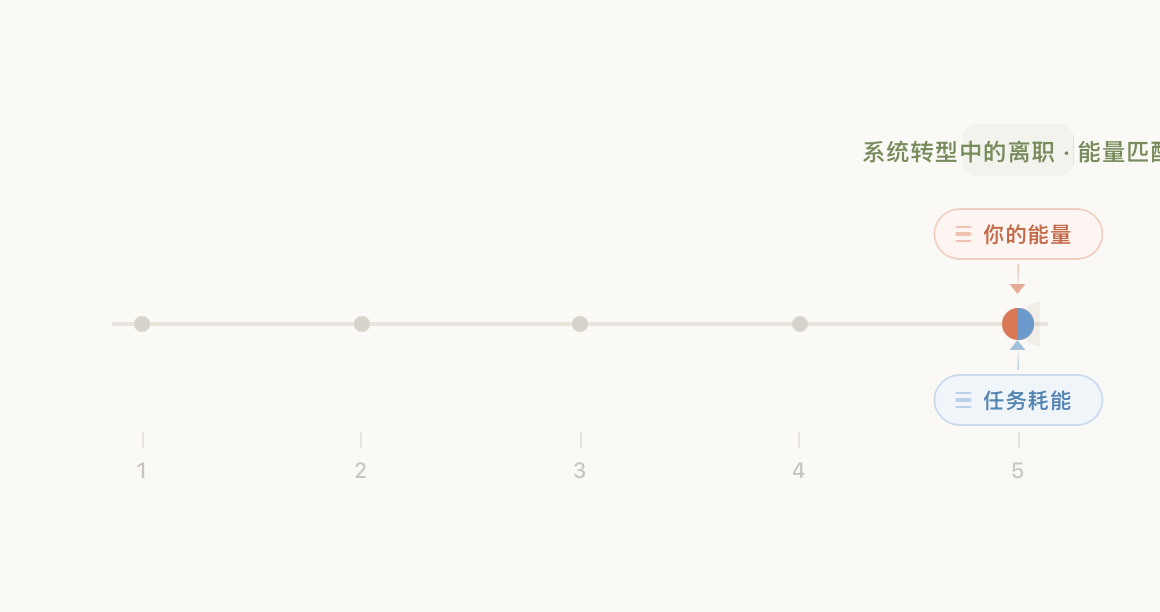
In 1st gear, people cut because they can't carry any weight at all. That's usually a hard landing — and hard landings have extra costs.
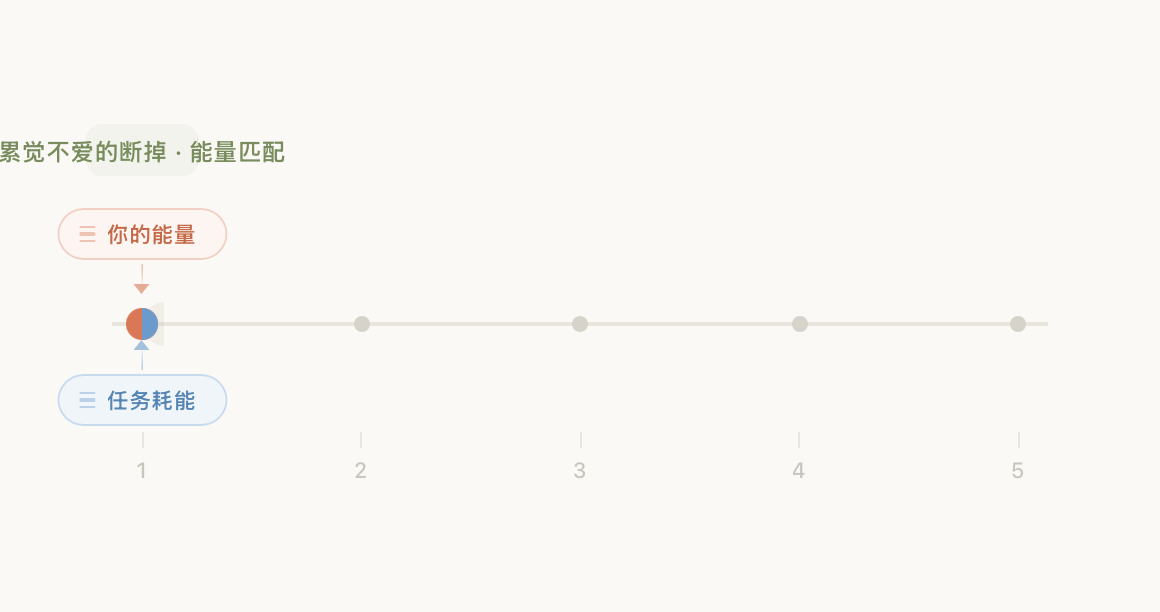
The cost of the mismatch:
In practice, of course, people often leave first, recover, then set out again — nothing wrong with that.
What I object to is packaging it as "facing your fear." The heroic glow feels good, until you find out later there was a better play all along.
The self-help shelf doesn't sort by gear either
Atomic Habits isn't wrong. It just assumes you have 4th-gear energy to design environments and break down new habits. If you're in 1st, breaking down a habit is a mountain you can't climb.
Deep Work isn't wrong. It just assumes 3rd-gear energy to restructure your whole workday. But what if you're in 2nd — could deep work be cut down into advice that fits your gear?
The books aren't wrong. What's wrong is that nobody told you: every piece of advice has its own gear.
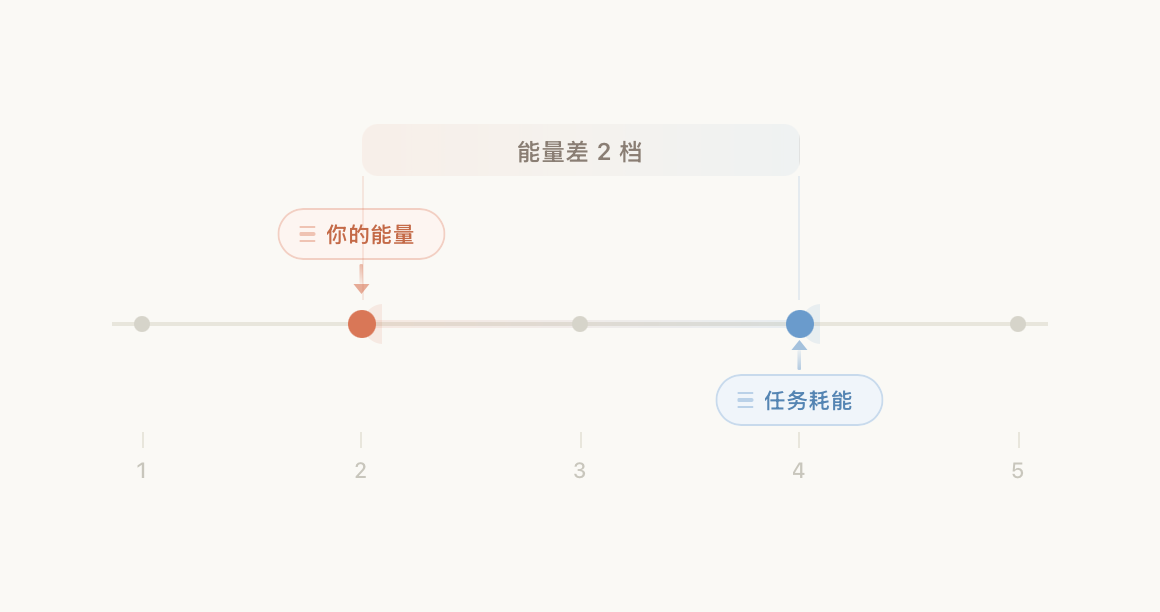
That's all the Misshift ruler is. The top edge measures your state; the bottom edge measures the task.
Every gear has things it can do — and actually get done.
The way out is just as direct: raise your state's gear on top, lower the task's cost below, both ends work toward the middle, and the thing starts to move. (The book's Foundations chapters walk through this in detail.)
Once you hold this lens, you can cut any standardized advice down to the version that fits your current state. Advice you'd shelved, compromised on, written off — much of it comes back to life.
Where this ruler comes from
This tool is the model I distilled from close to ten years of consulting.
My clients know every theory on the market — atomic habits, flow, deep work. They don't just know them; they're often the ones teaching them.
And still they have things they can't move. Still, on low days, they turn good methods into self-attack.
See — all advice has a gear. Mismatched, it doesn't just fail. It does damage.
About the book
You've read this far. Three ways to go from here.
- To really learn the ruler: read the Foundations chapters. They take the ruler apart — the energy pool, the five system states — and explain how the two ends finally meet. English edition — coming soon.
- To find out which gear you're in: that's what the full book, Misshift, answers. How to recognize each of the five gears, where people misread themselves, which advice each gear can't touch, and what the real leverage is — plus a chapter on breaking down the same task differently in each gear. English edition — coming soon.
- To see, directly, what your own mismatch looks like: that's the work I've done for close to ten years. Consulting
Next time someone hands you a piece of advice — or you're about to hand one to someone else — pause and ask:
What gear is this advice? What gear is he in right now?
Just that one move.
Misshift
Why the things you're capable of sometimes just won't move